Introduction
Proper handling and storage of research peptides is critical for maintaining product integrity and ensuring reliable experimental results. At Elevate2XL, we supply high-purity peptides strictly for research use only—not for human consumption. This article provides essential tips and best practices for laboratory professionals to safely manage their research peptides and uphold the highest standards of scientific rigor.
1. Receiving and Inspecting Your Peptides
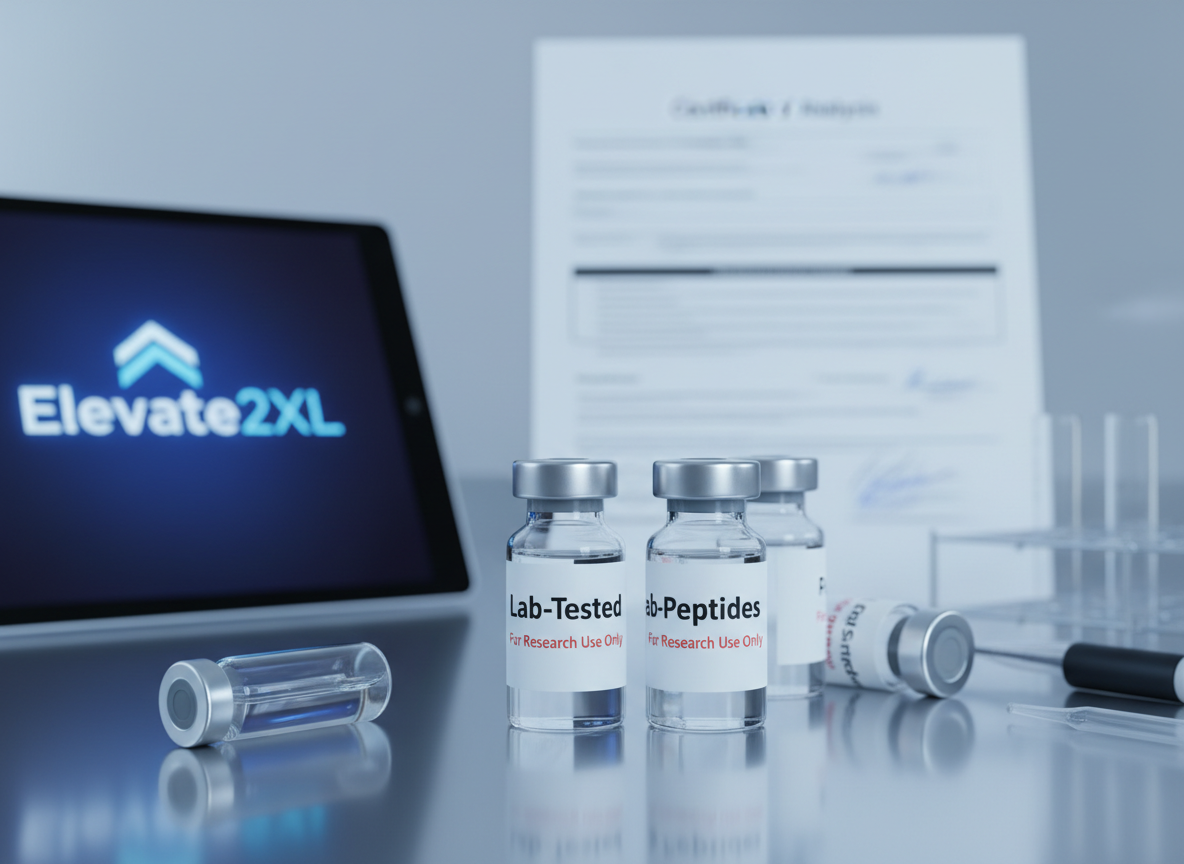
- Verify packaging is intact and labels read “For Research Use Only.”
- Check the Certificate of Analysis (COA) for batch-specific purity and quality data.
2. Safe Handling Protocols
- Always wear gloves, lab coat, and eye protection when handling peptides.
- Use clean, dedicated tools to avoid cross-contamination.
- Work in a sterile environment to maintain sample integrity.
3. Storage Conditions
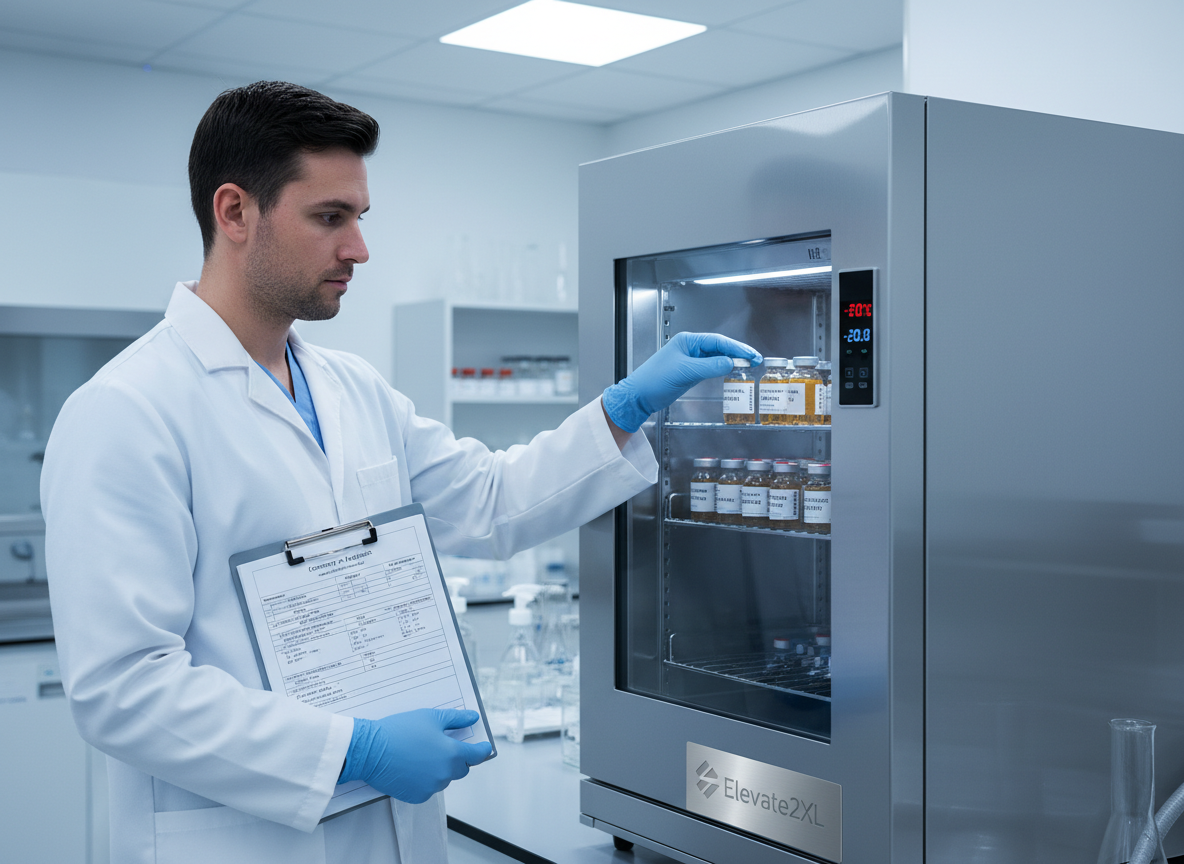
- Store lyophilized (powder) peptides in a cool, dry place—preferably at -20°C or lower.
- Protect from light and moisture; use desiccants and amber vials if available.
- For reconstituted peptides, refrigerate at 2–8°C and use within recommended timeframes.
4. Labeling and Documentation
- Clearly label all containers with peptide name, concentration, and date received/prepared.
- Maintain detailed inventory records for traceability and compliance.
5. Disposal and Compliance
- Dispose of unused or expired peptides according to institutional and legal guidelines.
- Never dispose of research peptides in regular trash or drains.
6. Legal and Safety Reminders
- All Elevate2XL products are for research use only, not for human use.
- Ensure all lab personnel are trained in safe handling and aware of legal restrictions.
Conclusion
By following best practices for handling and storage, researchers can preserve peptide quality, minimize risk, and ensure the validity of their scientific work. Elevate2XL is committed to supporting safe, responsible research—always with products labeled and intended for research use only.
Disclaimer: All products mentioned are for laboratory research purposes only and are not intended for human use.